
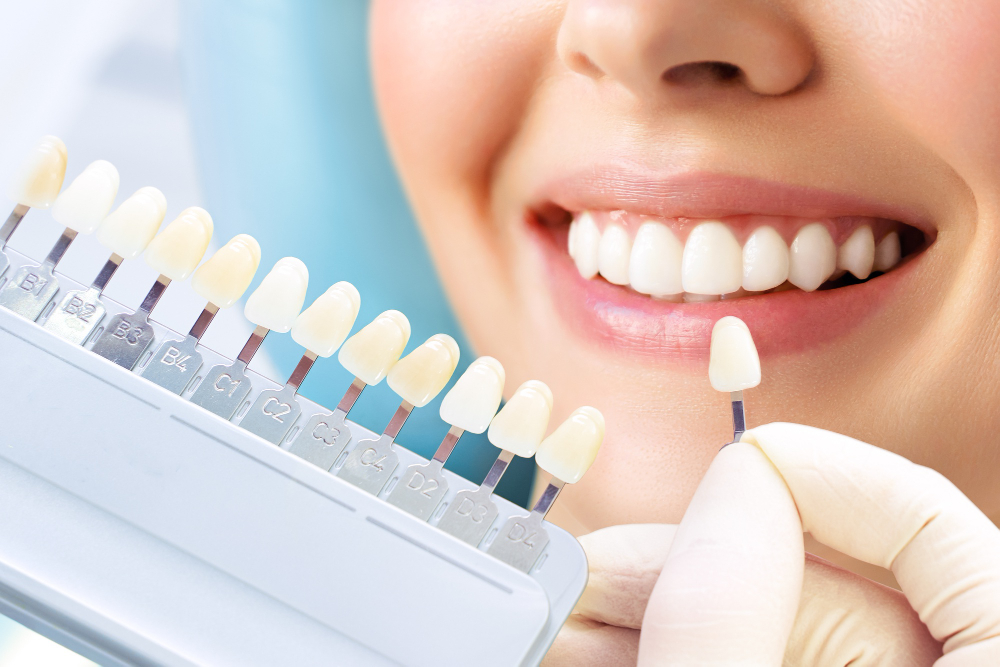
Dental veneers are thin covers placed on the front of teeth. They help improve the look of your smile. Many people choose dental veneers to fix chipped, stained, or uneven teeth. In this blog, you will learn what dental veneers are, their benefits, the procedure, possible risks, and how to care for them. If you are thinking about dental veneers, this guide will help you understand what to expect.
What Are Dental Veneers?
Dental veneers are thin shells made from porcelain or resin. Dentists bond them to the front of your teeth. Usually, people get veneers to fix teeth that are discolored, worn down, chipped, or uneven. Sometimes, veneers can also close small gaps between teeth. Because veneers look like natural teeth, they are a popular choice for a brighter, more even smile. According to the American Dental Association (ADA), veneers are safe and effective when placed by a trained dentist.
Benefits of Dental Veneers
The Dental Veneer Procedure
Getting dental veneers usually takes two or three visits. Here is what you can expect:
Risks and Considerations
While dental veneers are safe for most people, there are some risks and things to consider. For example, veneers are not reversible because some enamel is removed. Also, veneers can chip or crack if you bite hard objects. Some people may feel tooth sensitivity after the procedure. Veneers may not be suitable for those with weak teeth, gum disease, or those who grind their teeth. Always talk to your dentist to see if veneers are right for you. The ADA suggests discussing all options before making a decision.
Aftercare and Maintenance Tips
Proper care helps your dental veneers last longer. Here are some easy tips:
With good habits, your veneers can stay bright and strong for many years.
Frequently Asked Questions About Dental Veneers
Conclusion and Next Steps
Dental veneers can give you a brighter, more even smile. They offer many benefits, but it is important to know the risks and care steps. If you are thinking about dental veneers, talk to a qualified dentist. They can help you decide if veneers are the best choice for your needs. Consult a qualified dentist for personalized advice about dental veneers.